Transylvania

Official audio guide · English

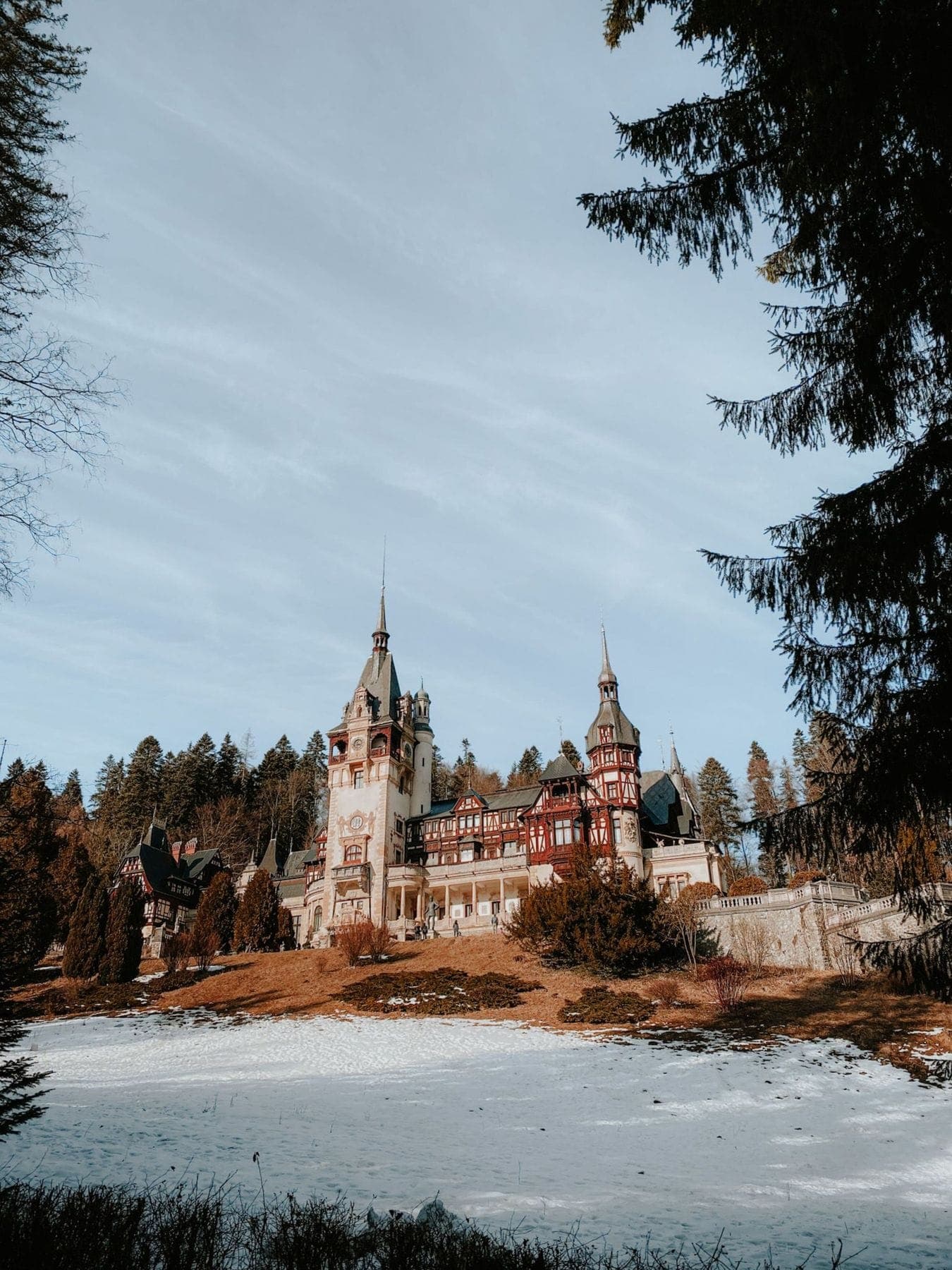
Peleș Castle

Complete audio guide to Peleș Castle: the ground floor and first floor of the current route, plus a dedicated section on Pelișor Castle, visited with a separate ticket.

Created by Transylvania Private Tours·Other languages:EspañolDeutschItalianoFrançais

How to use this audio guide

  • Listen to the tracks directly from this page, or download them with each track's button for offline use.
  • Every track carries the number and name of the room: if the museum route changes order, simply pick the matching track.
  • Use headphones and respect the silence of the rooms. Enjoy your visit!

Peleș Castle — the route

The current ticket includes the ground floor and the first floor

01

Welcome: a king's dream

Download
Read the text

Welcome to Peleș Castle, considered by many the most beautiful palace in Eastern Europe. This audio guide will walk with you room by room; the route follows one direction and the rooms are signposted, so if the order ever varies, simply choose the track named after the room. Peleș was born from one man's dream: King Carol the First, the German prince who accepted the Romanian crown in 1866 and wore it for forty-eight years — the longest reign in the country's history. In love with this Carpathian valley, he bought the land and in 1873 began a colossal project that would continue, in its various phases, until 1914. Hundreds of craftsmen from all over Europe worked here: Italian stonemasons, German carpenters, Austrian decorators, side by side with Romanian workers. The result is this German Neo-Renaissance palace of more than one hundred and sixty rooms — and the most modern building of its age: the first castle in Europe lit entirely by its own electricity, with central heating, a lift, and even a glass ceiling that opens. Carol died here, in his palace, in 1914. Step into his dream.

02

The exterior and the terraced gardens

Download
Read the text

Before you pass through the door, give yourself a few minutes on the terraces. The castle unfolds over seven levels of Italian-style gardens, adorned with Carrara marble statues, fountains, urns and stone balustrades. Many of the sculptures are the work of the Italian artist Raffaello Romanelli. Raise your eyes to the façade: the dark timber framing, the slender towers and the thousands of carved details compose the image of a German fairy-tale castle planted in the middle of the Romanian mountains. That is no coincidence: Carol the First, born a Hohenzollern prince, wanted to bring the architecture of his Rhineland childhood to the Carpathians. Notice the courtyard of honour, its façades covered in mural paintings, with a central fountain: in summer this corner looks more Italian than German, and it is one of the most photographed places in Romania. Behind the castle rises the fir forest of the Bucegi massif — the perfect backdrop. When you are ready, head for the museum entrance: the interior surpasses everything the façade promises.

03

The Hall of Honour

Download
Read the text

Prepare yourself: you are entering one of the most impressive halls in Europe. The Hall of Honour rises three storeys in carved walnut, with a richness that takes the breath away: columns, balconies, staircases and reliefs wrap around the visitor completely. Study the alabaster bas-reliefs and the statues, and let your gaze climb, floor by floor, to the ceiling. There, the palace's technical jewel awaits: a stained-glass ceiling that slides fully open by electric mechanism, to air the hall and flood it with sky on summer days. At the end of the nineteenth century, this was pure science fiction. This hall was the kingdom's calling card: ambassadors, princes and heads of state were received here, and every centimetre is designed to impress. It succeeded then, and it still succeeds today. Notice the tapestries too, and the light filtering through the glass lantern: the museum's photographers know this hall never looks the same twice. Take your time before moving on: rarely again will you be surrounded by so much noble wood worked to such perfection.

04

The Royal Library and the secret door

Download
Read the text

You are entering the intellectual refuge of Carol the First. The Royal Library holds thousands of volumes in carved walnut bookcases climbing to the ceiling: literature, history, military science, philosophy — in German, French, Romanian and other languages. Carol was a disciplined, methodical reader; he rose at dawn and devoted hours to study, convinced that a king should be the best-informed man in his realm. But this room also hides a delightful secret: one of the bookcases is really a disguised door. Behind the spines of the books lies a passage that allowed the king to withdraw discreetly to his private apartments without crossing salons full of guests. Picture it: the conversation drags on, the king excuses himself for a moment — and literally vanishes among the books. Search with your eyes, without touching, and try to guess which bookcase is lying. The museum guides sometimes reveal it; we prefer to leave you the doubt — it is more fun. In this room, knowledge and mystery share a shelf.

05

The Armoury Halls

Download
Read the text

You are entering one of the most important weapons collections in Europe: more than four thousand pieces gathered with passion by King Carol the First, who before he was a king was a Prussian officer. The two armoury halls span five centuries of military history, from the fifteenth to the nineteenth century. You will see swords and rapiers, halberds, crossbows, arquebuses, duelling pistols inlaid with mother-of-pearl, complete European suits of armour, and a fascinating oriental arsenal: Ottoman scimitars, Persian daggers, chain mail and damascened shields. The most celebrated piece awaits you at the centre: a complete equestrian armour, for horse and rider, from the sixteenth century, of the Maximilian type — unique in Romania. Look at it closely: every articulated plate, every rivet, is the work of armourers who were engineers and artists at once. Consider that many of these weapons were never meant for war, but for prestige: diplomatic gifts, parade pieces, symbols of power. In these halls, steel tells the history of Europe better than many books.

06

The royal study and the Council Room

Download
Read the text

These rooms were the political centre of Romania for almost half a century. In the working study, amid carved wood and leather, King Carol the First received ministers and generals every morning, read the European press and signed the documents that modernised the country: railways, universities, the port of Constanța, independence itself — won in the war of 1877. Notice the almost military order of the desk: it portrays the man, punctual to the point of legend, of whom it was said you could set your watch by his daily walk. The Council Room, with its wood panelling and solemn seats, is inspired by the council chambers of Switzerland's historic town halls — Lucerne in particular — and here the king gathered his advisers in grave moments. Between these walls, wars, alliances and reforms were debated; and here, in 1914, an ageing Carol lived through the bitterest dilemma of his life: the First World War set his German homeland against the interests of his adopted Romanian one. He died a few weeks later, in this very palace.

07

The Music Room and Carmen Sylva

Download
Read the text

This room belongs to the artistic soul of the palace: Queen Elisabeth of Romania, wife of Carol the First, known across Europe by her pen name, Carmen Sylva. Elisabeth was a poet, writer, painter and musician; she published dozens of books, translated Romanian poetry into German, and turned Peleș into a cultural salon of the first rank, visited by musicians such as the young George Enescu, the great hope of Romanian music. In this room she held literary evenings and intimate concerts. Look at the carved wooden furniture: it is an exotic gift from the Maharajah of Kapurthala, in India, and fills the room with a unique oriental air. Notice also the harp, the queen's favourite instrument, and the painted and embroidered details, many designed by the queen herself. Elisabeth used to say that a palace without art is merely an expensive building. As you walk through, imagine the winter afternoons with the snowy mountains behind the glass: inside, verses in three languages, a harp, and a queen who preferred a poem to a military parade a thousand times over.

08

The Florentine Hall

Download
Read the text

You are now crossing the gateway to Italy. The Florentine Hall, the palace's great reception room, is a homage to the Italian Renaissance: marble, gilded bronze and light. Look first at the two monumental bronze doors, cast in Rome, which seem to have stepped out of a Florentine baptistery. Then raise your eyes to the carved and gilded ceiling, from which hang great Murano crystal chandeliers, blown in the Venetian lagoon. The Carrara marble fireplace, with its sculptures, presides over the hall like a secular altar. Here the great balls and gala banquets were held: diplomats in decoration-laden uniforms, ladies in Paris gowns, waltzes until dawn. These walls have heard conversations in every language of Europe. Think of the contrast that defines Peleș: outside, a German castle; in this hall, the splendour of Florence; a few doors further on, as you will soon discover, the Orient. Carol the First and his architects wanted to gather here the best of every European civilisation — and in this hall, Italy won the match.

09

The Moorish Salon

Download
Read the text

From Florence to the Alhambra in a single step: welcome to the Moorish Salon, one of the most surprising rooms in the palace. Its horseshoe arches, slender columns, polychrome stucco and geometric decoration recreate with astonishing fidelity the Hispano-Moorish art of Andalusia. Carol the First's architects studied the palaces of Granada and Seville to design this corner of the Orient in the heart of the Carpathians. The centrepiece is a Carrara marble fountain, whose murmuring water once accompanied conversation, as in the courtyards of Andalusia. The picture is completed by the collection of oriental weapons decorating the walls: damascened sabres, shields, daggers with hilts of silver and stone. In the nineteenth century, the taste for the Orient was all the rage in Europe's courts, and no great palace was complete without its Arab or Turkish salon. The one at Peleș is considered among the finest in Europe. Sit down by the fountain in your mind and listen to the water: it is the same sound that lulled kings more than a century ago.

10

The Turkish Parlour

Download
Read the text

We continue the oriental journey in the Turkish Parlour, a small casket of intimacy that served as the smoking room. Here, after gala dinners, the gentlemen withdrew to talk amid curls of smoke, coffee and liqueurs. Everything in the room invites repose: the low divans covered with silks and Turkish kilims, the walls lined with silk embroideries from Istanbul, the little tables inlaid with mother-of-pearl, the hookahs and the worked copper pieces gleaming in the half-light. Raise your eyes to the carved cedar ceiling: a labour of infinite patience that took more than a year to complete. In the nineteenth-century imagination, the Turkish corner was the space of confidences: away from protocol, cigar in hand, ministers and princes discussed here what could not be said in the salons. The walls of this little room hold more secrets of state than many an archive. Breathe in the atmosphere: between Vienna and Istanbul, between the waltz and Turkish coffee, Romania built its identity precisely at this crossroads of worlds — which this parlour sums up to perfection.

11

The Theatre Hall and the Klimt frescoes

Download
Read the text

Few museum rooms hide a surprise like this one. You are standing in the palace's little theatre: sixty red velvet seats, an intimate stage with a gilded proscenium and a royal box. Here the family and their guests enjoyed plays, concerts and, from 1906, the first film screenings in Romania: Peleș had cinema before most of the world's capitals. But now raise your eyes to the paintings decorating the hall, for they bear an illustrious signature: they were made in the 1880s by the Viennese workshop of a very young Gustav Klimt, together with his partner Franz Matsch. Yes — that Klimt: the future genius of gold and of the most famous kiss in painting, who before revolutionising art earned his living decorating theatres for the courts of Europe. To gaze at Klimt frescoes in a Carpathian castle is one of those unexpected gifts that only Peleș offers. Sit for a moment, if the route allows, and imagine the hall in darkness, the projector crackling, and the court discovering, astonished, the first moving pictures of their lives.

12

The Royal Dining Room

Download
Read the text

The table was an affair of state, and this dining room proves it. Around the great table, the royal family and their guests gathered every evening: diplomats, writers, officers, scientists. Etiquette was strict, the menus were written in French, and the tableware was worthy of a museum: porcelain, crystal and silver cutlery commissioned from the finest houses in Europe. Look at the carved wooden furniture and the chairs upholstered in embossed Cordoba leather — that Spanish leather, tooled and gilded, which was the height of luxury. Notice the monumental sideboard and the details of the coffered ceiling. Queen Elisabeth, ever the artist, personally oversaw the table decorations, and the chronicles tell of dinners stretching long into the night amid conversations in four languages. Illustrious guests from across Europe were entertained here, including Emperor Franz Joseph of Austria during his visit of 1896. As you cross the room, think how much history was decided not in offices, but between the first course and dessert.

13

Up to the first floor: stained glass and technical marvels

Download
Read the text

As you climb to the first floor, this track keeps you company with the story that makes Peleș unique: its hidden modernity. Behind the carved wood and the tapestries, this nineteenth-century castle conceals technology that would astonish even today. It was the first castle in Europe fully lit by electricity, produced by its own hydroelectric plant from 1884 — when candles still ruled in Paris and Vienna. It had central heating from the start, a lift for the royal family, a central vacuum-cleaning system, and even that movable glass ceiling you admired in the Hall of Honour. As you climb, notice the leaded stained-glass windows: scenes of legends and landscapes that tint the light with colour, many created in Swiss and German workshops. Carol the First wanted to prove to the world that Romania, a young kingdom, could stand at the vanguard of Europe. Peleș was his manifesto: outside, a medieval fairy tale; inside, a perfect machine of the future. With that idea in mind, enter the rooms of the first floor.

14

The first floor: the Imperial Suite and the guest rooms

Download
Read the text

The first floor held the private spaces and the rooms of the guests of honour, and its jewel is the Imperial Suite. It was prepared with one very specific purpose: to accommodate Emperor Franz Joseph of Austria, who visited Peleș in 1896. For the elderly emperor an entire suite was decorated in Austrian Baroque style, with gilded woods, sumptuous upholstery and every modern comfort of the palace, from electric light to a private bathroom. Walk through the other rooms of the floor as well: guest salons, cabinets and bedrooms, each decorated with its own personality, in the fashion of the great palaces — a yellow room, intimate parlours, breakfast spaces with mountain views. Notice how the atmosphere changes from the great gala halls below: here the ceilings are lower, the fabrics softer, the scale more human. This was the territory of daily life: letters written at dawn, slow breakfasts, conversations by the window. Palaces are judged by their state rooms — but they are loved for rooms like these.

15

The Concert Hall and farewell to Peleș

Download
Read the text

We end the first-floor route in Queen Elisabeth's musical kingdom: the Concert Hall. Here, around the piano and the organ, Carmen Sylva gathered musicians, poets and friends; here sounded the first notes of artists who would go on to conquer Europe, led by the great George Enescu, who played for the queen when he was barely a child prodigy. Let this room sum up everything you have seen: Peleș was not just a residence, but a project for a country. Carol the First, the soldier king, built here the symbol of a modern, European Romania; Elisabeth, the artist queen, gave it a soul. After them, the palace lived through the entire history of the twentieth century: it witnessed two world wars, became a museum in 1953, was closed by the Ceaușescu dictatorship, and was returned to the royal family after democracy came — a family that keeps it open today as a museum for everyone. If you have a ticket for Pelișor Castle, a few minutes' walk away, the final tracks of this guide await you: the Art Nouveau home of Ferdinand and Marie is another world, and well worth the visit. Thank you for walking Peleș with us.

Pelișor Castle

Separate ticket · a few minutes' walk from Peleș

16

Pelișor: the home of Ferdinand and Marie

Download
Read the text

Some two hundred metres from the great palace, a completely different castle awaits: Pelișor, 'little Peleș'. It was built between 1899 and 1902 by the Czech architect Karel Líman as a residence for the heirs to the throne: Prince Ferdinand and Princess Marie, the couple who would later reign over the Romania of the Great Union. Carol the First gave it to them with a clear intention: to keep the heirs close, but give them a home of their own. And Marie, whose artistic taste was sweeping and utterly personal, turned it into her manifesto: none of the historicist pomp of Peleș; here Art Nouveau triumphs — the new art then sweeping Europe with its curving lines, stylised flowers and light. Marie blended that modern language with Celtic motifs from her native Britain and Byzantine symbols from her adopted homeland, creating a style experts simply call 'the Marie style'. Pelișor is smaller, more intimate and more personal than its neighbour: it is not the palace of a king, but the portrait of a queen. Step inside and see for yourself.

17

The Art Nouveau interiors

Download
Read the text

Walk through the rooms of Pelișor unhurried, and notice how the air changes compared with the great palace. The staircase and the hall, lined with pale wood, welcome you with soft lines and vegetal ornament: this is the grammar of Art Nouveau, where every piece of furniture seems grown rather than made. Study the furniture designed especially for the castle, much of it after Marie's own ideas: chairs and tables with stem-like curves, lamps like flowers, bronze fittings imitating roots. Look for the motif that repeats everywhere: the thistle, Marie's emblem flower, a memory of her childhood between England and Scotland, alongside Byzantine crosses and symbols she drew herself. In the rooms you will also see Zsolnay ceramics, coloured glass and delicate textiles. Here the children of Ferdinand and Marie grew up, among them the future King Carol the Second and Princess Ileana, the lady of Bran. Pelișor was a true family home: more laughter than protocol, more watercolours than councils of ministers. That warmth can still be felt in every room.

18

The Golden Room

Download
Read the text

You have reached the most extraordinary room of Pelișor, and one of the most singular in Europe: the Golden Room. Look up: the walls and ceiling are entirely covered with gilded thistle leaves, modelled in stucco, wrapping the room in a warm glow, part Byzantine, part vegetal — like the inside of a reliquary. Marie personally designed this space as her bedroom and spiritual refuge. The queen, deeply religious in her own mystical and thoroughly unconventional way, wanted a room that would be at once garden and chapel: the thistle of her Scottish childhood turned to gold, the light of icons turned into architecture. In this very room, on the eighteenth of July 1938, Queen Marie closed her eyes forever, surrounded by her family. And there is something more, which turns the visit into a pilgrimage: since 2015, the silver casket containing the queen's heart — that travelling heart which passed through Balchik and Bran — has been displayed precisely here, at Pelișor. Romania's most beloved queen rests, in the most literal way possible, in the room she herself dreamed in gold.

19

The queen's studio and the intimate corners

Download
Read the text

Before you bid farewell to Pelișor, pause in Marie's spaces of work and reflection. In her studio, amid Art Nouveau furniture and windows opening onto the forest, the queen wrote her diaries, her fairy tales and her thousands of letters; Marie was a prolific writer, and her memoirs, The Story of My Life, were read across Europe — English readers may know that she wrote them in English, her mother tongue. Here she painted watercolours, designed furniture and dresses, and received her closest friends far from protocol. Look at the small oratory and the Byzantine-inspired corners, with their crosses and golden light: Marie's faith was personal and artistic, made of beauty more than dogma. Notice also the photographs and family objects: portraits of her six children, souvenirs of her travels, small treasures of a novelistic life that took her from the court of her grandmother, Queen Victoria, to the trenches of the First World War as a nurse, and from there to the folk altars of Romania, which venerates her to this day. Into these small rooms fits an immense life.

20

Farewell to Sinaia

Download
Read the text

Our journey through the castles of Sinaia ends here. You have visited two worlds in a single morning: Peleș, the grandiose manifesto of a builder king, and Pelișor, the intimate poem of an artist queen. Together they tell the story of modern Romania: a young country that wanted to look Europe in the eye — and did so through architecture and art as well. If you have time left in Sinaia, the valley holds more treasures: the Sinaia Monastery, founded in 1695, which gave the town its name; the trails of the Bucegi massif, reached by cable car; and the Belle Époque charm of this little spa town they call 'the pearl of the Carpathians'. This audio guide was created by Transylvania Private Tours, specialists in private tours across Transylvania and the Carpathians. If you would like to visit Bran Castle, Cantacuzino Castle, the fortified churches or any corner of this extraordinary land with us, we would be delighted to accompany you in person. Thank you for your visit — and see you soon in Romania.